The scope
What Keys does
- Replacement
- Full tear off down to the deck, decking replaced where it has gone soft, then underlayment, ice and water membrane at the vulnerable details, valley metal, flashings, field and ridge. Shingles are Atlas and Malarkey.
- Repair
- Pipe boots, step and counterflashing, valley metal, nail pops, storm damaged sections, and the specific detail that is leaking rather than the whole plane.
- Inspection
- Photographs, measurements and a written scope you keep, whether or not Keys does the work.
- Gutter
- Seamless gutter formed on site to the length of the run, sized to the plan area of the roof feeding it, hung on hidden hangers, plus guards, realignment and repair.
- Drainage
- Downspouts, extensions, reroutes and underground carry away from the foundation.
And the shorter list, which matters more. Keys does not do siding, windows or commercial work. Keys does not represent or negotiate on anybody's insurance claim, because Missouri law at RSMo 407.725 does not permit a roofing contractor to do that. And Keys does not give a price before somebody has been on the roof.
Before the day
What should already exist
- A written scope. Square count, tear off to deck or overlay, underlayment specification, where ice and water membrane goes, flashing scope, ventilation work, gutter work if any, disposal, and the decking allowance with its per unit price.
- A permit answer. Confirmed with the City of Creve Coeur building department for your specific job before the dumpster arrives, not after. See the permit sheet.
- A dumpster and access plan. On the deeper lots here this is a real conversation. Where the dumpster sits, what it sits on, whether it is going up a long drive, and what happens to the turf underneath it.
- A weather rule. What happens if it turns. A roof is never opened up further than can be dried in before the end of the day, and if the forecast breaks the answer is to stop, not to push on.
The day
In order
Trucks and the dumpster arrive early, because tear off is loud and it is better finished by the afternoon. Landscaping under the eaves gets covered, and on a planted lot that is worth watching: shrubs come off worse from falling shingle than from anything else on a roofing job.
Tear off goes plane by plane rather than all at once, so the roof is never open across more area than can be dried in. As each plane comes off, the deck underneath it is walked, and that is when the decking count stops being an estimate. Anything soft or split gets marked. Photographs get taken before anything covers it. If the count is heading past the agreed threshold, somebody phones you before continuing rather than after.
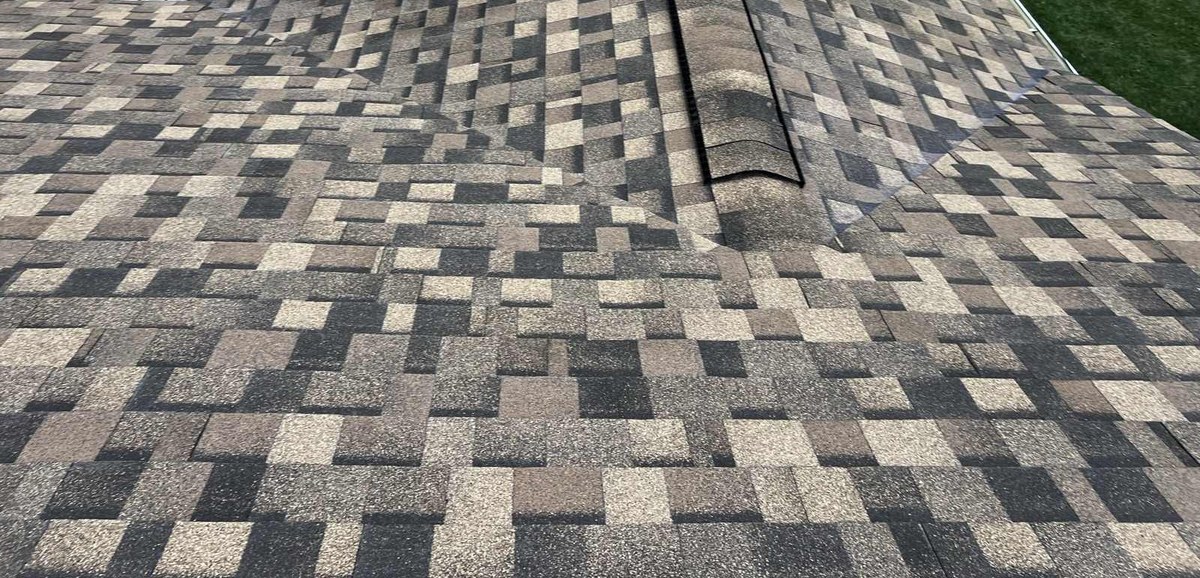
Then the assembly goes back on in order: drip edge, ice and water membrane at eaves, valleys and penetrations, underlayment across the field, valley metal, flashings at chimneys and wall junctions, the shingle field, and the ridge cap over the vent last. Penetrations get new boots rather than reused ones.
Gutter work, where it is part of the job, happens after the roof is finished, because the gutter is fitted to the finished edge and because a gutter hung first is a gutter that catches everything that comes off during tear off.
Clean up
The part that gets judged
The magnet sweep is the thing homeowners actually remember, and it is the thing most often done in a hurry at five o'clock. It should cover the lawn, the beds, the drive and the street, and it should be done more than once.
A nail found in a tyre in August is not, strictly speaking, evidence of a bad roof. It is evidence of a bad afternoon, and it is the single most common complaint in residential roofing anywhere. If you want one thing to watch on the last day, watch that.
An honest note about a busy season
After a significant storm season in this metro, every competent crew is booked and the pressure on scheduling is real. That pressure is where corners get cut, and it is cut most often in tear off preparation and in clean up, because those are the two parts a homeowner cannot inspect after the fact.
The practical protection is unglamorous: agree what happens if the weather turns, agree the photographs, and walk the property yourself the following morning while it is still fresh.
Afterwards
What you should be holding
At the end you should have a folder, digital or otherwise, containing the written scope you agreed to, photographs of the deck before it was covered, photographs of the membrane and flashing details, a record of exactly how much decking was replaced, the final invoice matching the scope, and the paperwork covering the work.
That folder is worth real money at two moments: if anything goes wrong in the first few years, and when you eventually sell the house. On a job that legitimately required no permit, it is the only record that exists.
And then the useful thing to do is nothing at all for twelve months, and after one full Missouri winter, look again. The ridge, the valleys, the flashing and the attic after a hard rain. That is the inspection that tells you what you bought.
If you want the roof looked at, the form below reaches the office directly, or call (314) 220-2333. Somebody calls back, usually the same day, and nobody is sent to your door before you ask for that.