Three loads
Not one debris problem, three
The seasonal pattern on a wooded lot in this county is consistent enough to plan around.
- Spring
- Catkins, flower tassels and seed. Small, stringy and wet. Fine enough to pass through most guards and exactly the right size to knit together in a downspout elbow. The load nobody expects, because the trees have not dropped a leaf yet.
- Summer
- Twigs and small deadwood after every storm, plus whatever the squirrels drop. Coarse, so guards handle it well, but it sits on top of a guard rather than vanishing.
- Autumn
- The leaf itself, in quantity, over about three weeks. This is the load everyone plans for and it is the least mechanically damaging of the three.
- Winter
- Nothing new falls, but everything already in the trough now stays wet for months. This is where the damage actually happens.
Rot
What wet leaf litter does when it stops moving
A gutter full of leaves in October is a nuisance. The same gutter in February is a different object. The litter has broken down into a saturated mass that holds water permanently against three things: the back wall of the gutter, the fascia board behind it, and the bottom edge of the lowest course of shingle.
Fascia is usually the first casualty, and it fails from the back where you cannot see it. By the time paint bubbles on the front face the board behind it has been wet for two or three seasons. The gutter then loosens, because whatever the hangers are screwed into has gone soft, and the run begins to sag and pond, which accelerates everything.
This is slow. It is also entirely avoidable, and it is the reason the honest advice on a canopy lot is not a guard, it is a schedule.
Two clearings a year is the workable minimum on a lot with mature oak: once after the leaf drop finishes, which in this county usually means late November rather than early, and once in late spring after the catkins and seed have finished. Anyone on a lot with a large tree directly over a valley should assume more.
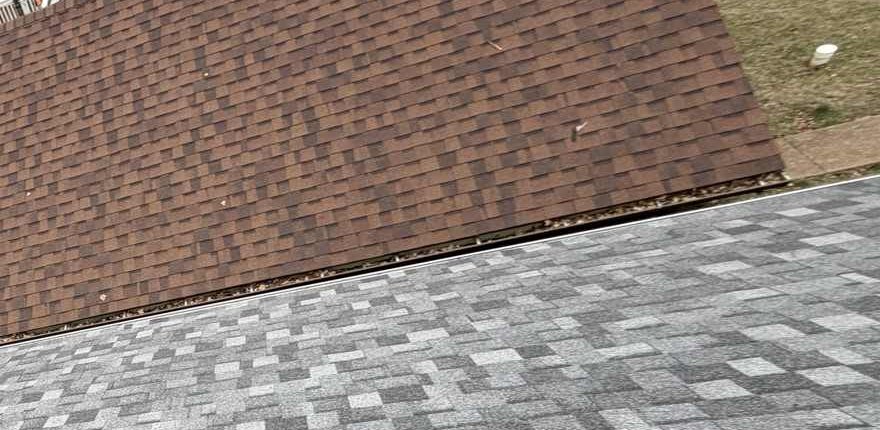
Valleys
The place a tree does real damage
A valley is where two roof planes meet and it is the highest volume, highest velocity path on any roof. On a lot with canopy it is also a debris trap, because everything that lands on either plane gets funnelled into the same narrow channel.
Debris held in a valley does two things. It abrades: grit and organic matter moving down the valley under water takes granule off the shingle, and granule is the only ultraviolet protection asphalt has. It also dams, and a valley that dams pushes water sideways under the shingle courses, which is one of the few ways a roof leaks well away from any obvious damage.
If your house has a valley under a large tree, that valley is the single most valuable thing to look at once a year, and it is the one place where a photograph taken from a ladder tells you almost nothing because the debris is usually below the visible line.
Guards
Honestly
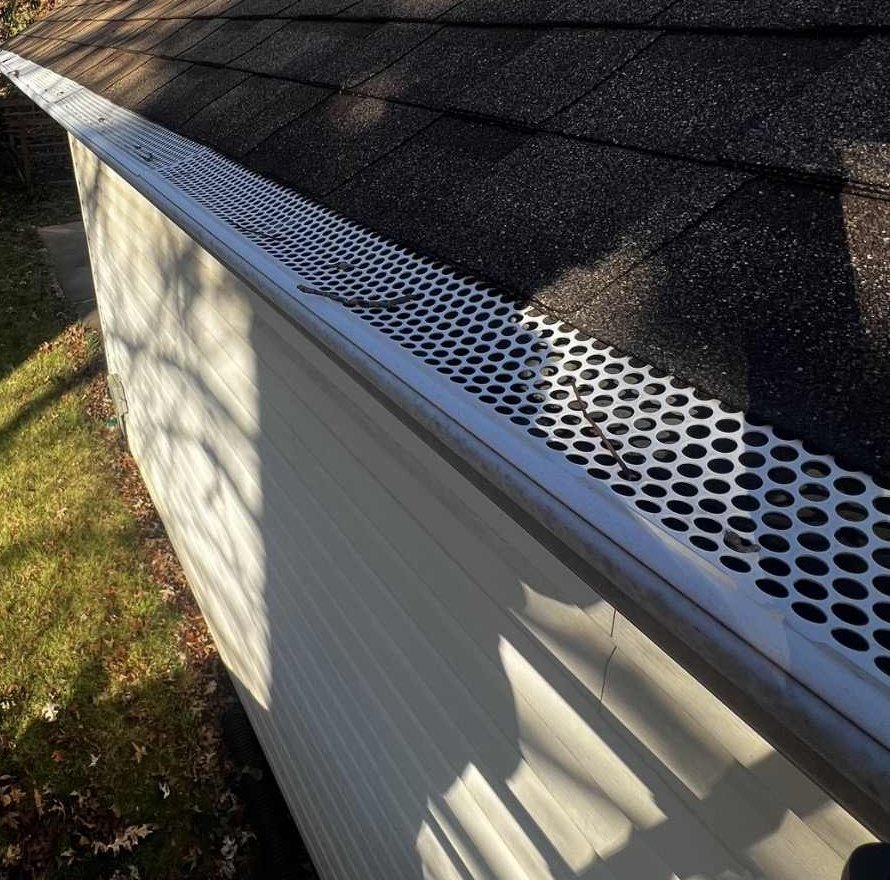
Gutter guards are worth having on a lot like this and they are heavily oversold, and both of those things are true at once.
What a guard does well: it keeps the coarse load out of the trough. Twigs, whole leaves and deadwood stay on top. That converts an annual excavation into an annual brush off, which on a two storey house is a genuine saving in risk as well as money.
What a guard does not do: it does not make a gutter self cleaning, and no guard on the market does on a lot with this canopy. Fine spring seed passes through mesh and micro mesh alike or clogs the mesh itself. Debris sitting on top of a guard in a hard rain can sheet water straight over the assembly, which is a new failure mode you did not have before. And a guard fitted over a gutter that was already too small for the roof feeding it fixes nothing at all, because the problem was never in the trough.
The unflattering paragraph
Guards are the highest margin item in residential gutter work and they are sold on a promise of never cleaning your gutters again. That promise is not deliverable under an oak. Any company that makes it to you on this street is either not looking up or is counting on you not going back to them in three years.
The correct order is: size the gutter to the roof, get the pitch and the outlets right, then decide whether a guard is worth it. Doing it in the other order is how people end up with a very expensive gutter that still overshoots.
Trimming
The part that is not a roofing job
Branches that touch or overhang a roof do three things: they deliver debris directly rather than by wind, they abrade shingle in a storm, and they give squirrels a bridge. Keeping limbs back from the roof plane is the highest return maintenance on a wooded lot and it is arborist work, not roofing work. Anybody who offers to top a mature oak as part of a roofing contract should be declined.
What is roofing work: correcting the pitch of a sagging run, adding outlets, fitting a gutter apron where water is getting behind the trough, replacing rotted fascia before the new gutter goes back up, and moving the discharge point away from the house. Those are on the catchment sheet and in the scope on the work sheet.